UK wellness favourite
The Gut-Health Power Bowl
Fibre, plant variety, live ferments and clean protein in one colourful bowl, ready in 15 minutes.
Shop nowTaking you to the shop in 8s
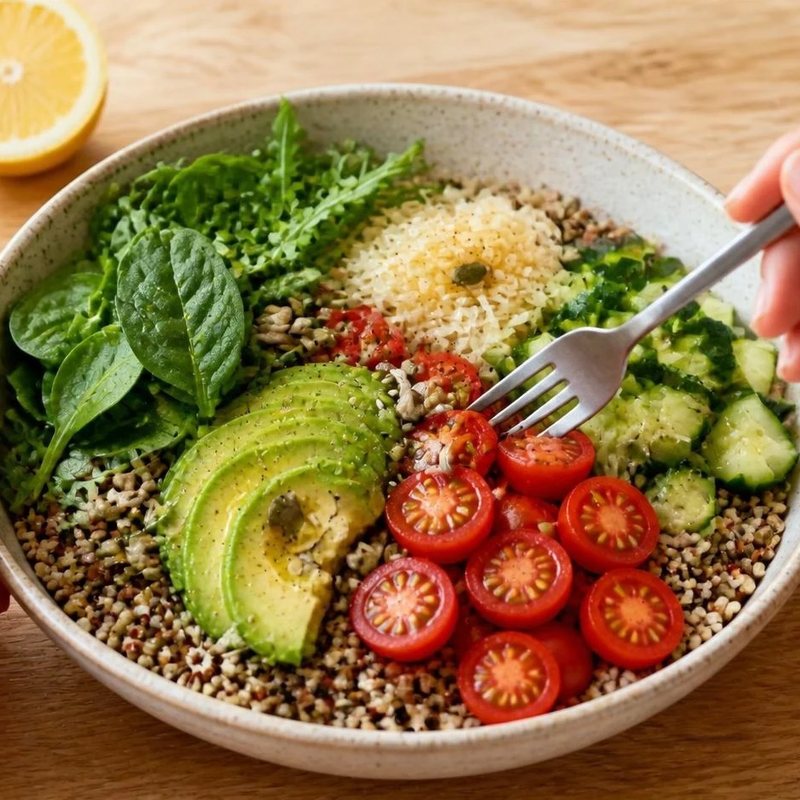
Fibre, plant variety, live ferments and clean protein in one colourful bowl, ready in 15 minutes.
Shop nowTaking you to the shop in 8s
No cooking skills needed. If your grains are already cooked, it's just chop, build and dress.
About 24 g of fibre in one bowl, a big step towards the UK's 30 g a day. Twelve different plants count towards your 30 a week, and raw sauerkraut or kimchi adds live cultures.
See the nutritionOne bowl, made exactly as the recipe, with quinoa and lentils. A filling, balanced main meal with most of a day's fibre.
| Amount | % RI | |
|---|---|---|
| Energy | ~700 kcal | 35% |
| Fat | 33 g | 47% |
| of which saturates | 4.6 g | 23% |
| Carbohydrate | 57 g | 22% |
| of which sugars | 8 g | 9% |
| Fibre | 24 g | 80%* |
| Protein | 27 g | 53% |
| Salt | ~1 g | 17% |
RI = Reference Intake of an average adult (8400 kJ / 2000 kcal). *Fibre shown against the UK's 30 g daily recommendation.
NRV = Nutrient Reference Value. Values are estimates calculated from standard food composition data for the quantities in the recipe. Actual values vary with the brands and exact amounts you use, and with your choice of grain and beans.
About 24 g per bowl from whole grains, lentils, greens, avocado and seeds. That's a big step towards the 30 g a day the UK recommends for adults.
About 27 g from lentils, quinoa and seeds. Protein contributes to the maintenance of muscle mass.
From quinoa, lentils, spinach and seeds. Magnesium and iron contribute to the reduction of tiredness and fatigue.
Lentils and spinach supply over twice your daily folate. Folate contributes to the normal function of the immune system.
From lentils, avocado, spinach and tomatoes. Potassium contributes to the maintenance of normal blood pressure.
Leafy greens are one of the richest sources. Vitamin K contributes to the maintenance of normal bones.
Avocado, extra virgin olive oil and seeds. Replacing saturated fats with unsaturated fats contributes to the maintenance of normal blood cholesterol levels.
Whole grains and beans are high in fibre and digested more slowly than refined carbohydrates, so the bowl keeps you full through the afternoon.
Every ingredient is a plant, and almost all of them are whole foods rather than ultra-processed ones.

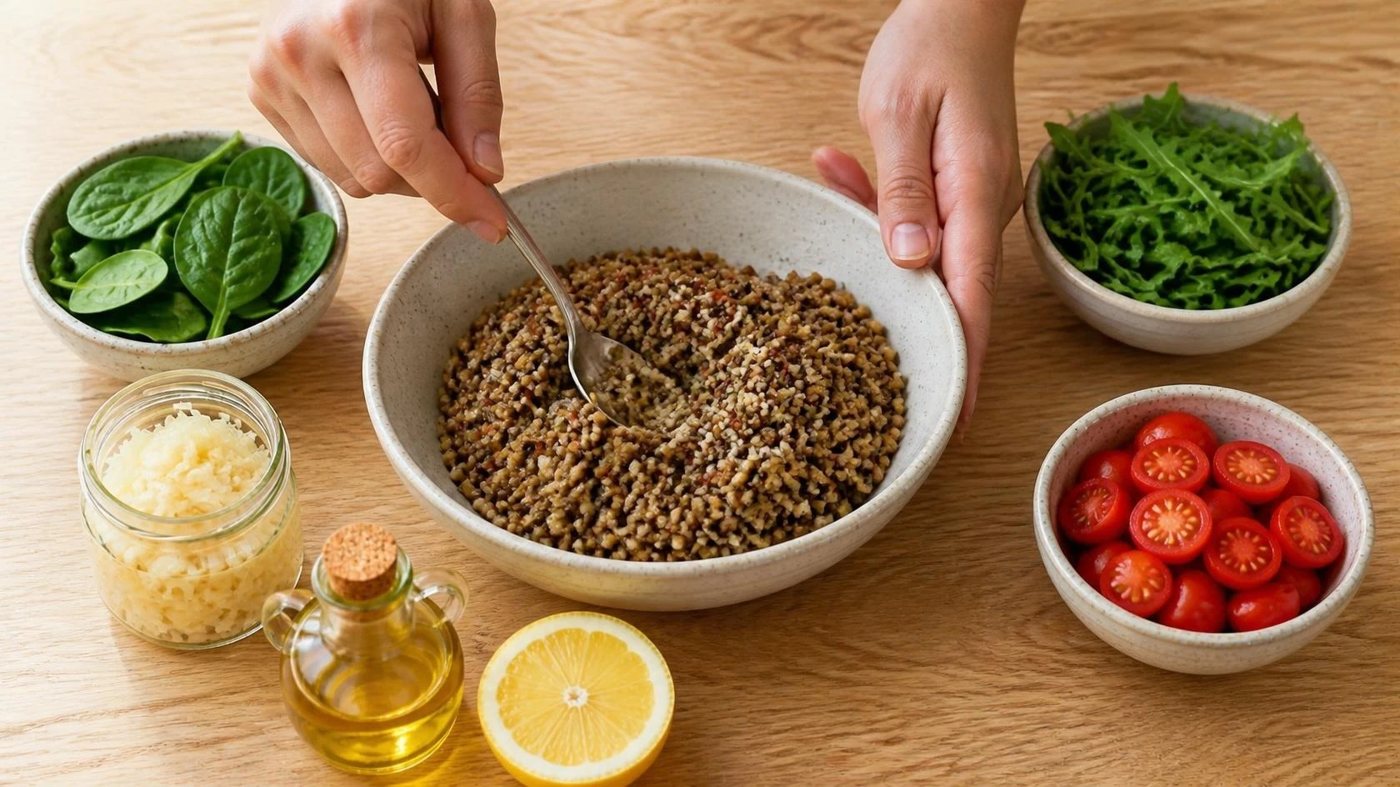
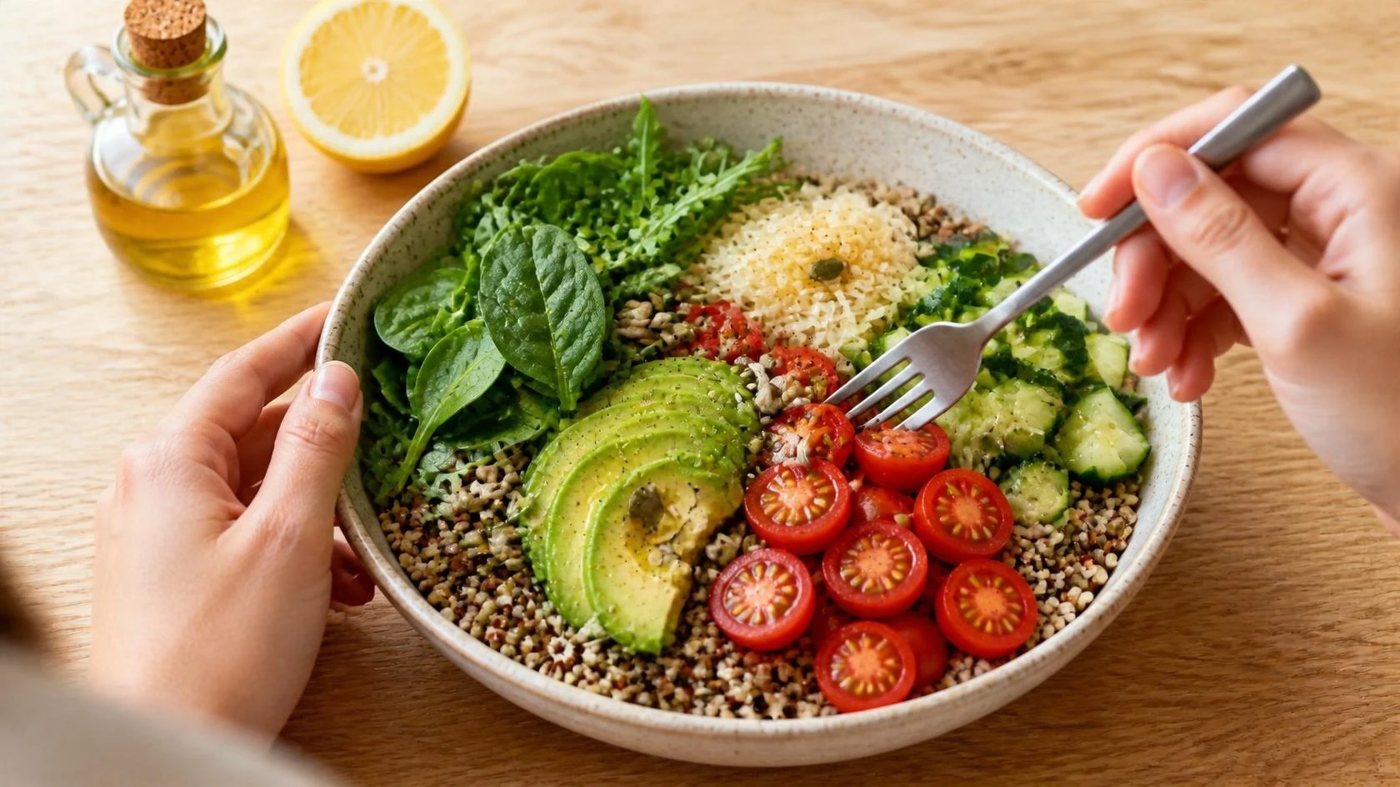
The UK recommends 30 g of fibre a day for adults. On average we eat about 16 g, and only around 4% of adults reach the target. It's the reason “fibremaxxing” has taken off on social media this year. This bowl closes most of that gap in one meal.
Fibre from whole grains, beans, vegetables, nuts and seeds is the main food for the bacteria in your large intestine. Different plants contain different types of fibre, which is why variety matters.
A popular way to build variety. Grains, beans, vegetables, fruit, nuts, seeds, herbs and spices all count. This bowl alone covers 12.
Sauerkraut, kimchi, kefir and live yoghurt contain live cultures, and fermented foods are one of the most studied areas of gut health. Keep them raw: heat kills the cultures.
If you eat little fibre now, increase it over a couple of weeks and drink plenty of water. A sudden jump can cause bloating, which is one reason people give up.
Sources: UK fibre recommendation (Scientific Advisory Committee on Nutrition); average intake from the National Diet and Nutrition Survey, as reported in the British Nutrition Foundation's Dietary Fibre in 2026 report (June 2026).